Indiana Spine Group

Deformity Conditions in Carmel, IN Scheuermann’s Kyphosis

Introduction to Scheuermann’s Kyphosis

Understanding Excessive Forward Curvature of the Spine

An increased forward curve of the upper back can sometimes be related to posture, but in Scheuermann’s kyphosis, the curvature develops because of structural changes in the vertebrae during growth. The condition most often becomes noticeable during adolescence and can vary considerably in severity. From Carmel, Indianapolis, Westfield, and Kokomo, Indiana, Dr. Peter Swiatek evaluates the shape, flexibility, and degree of spinal curvature to determine an appropriate treatment approach for patients with Scheuermann’s kyphosis.

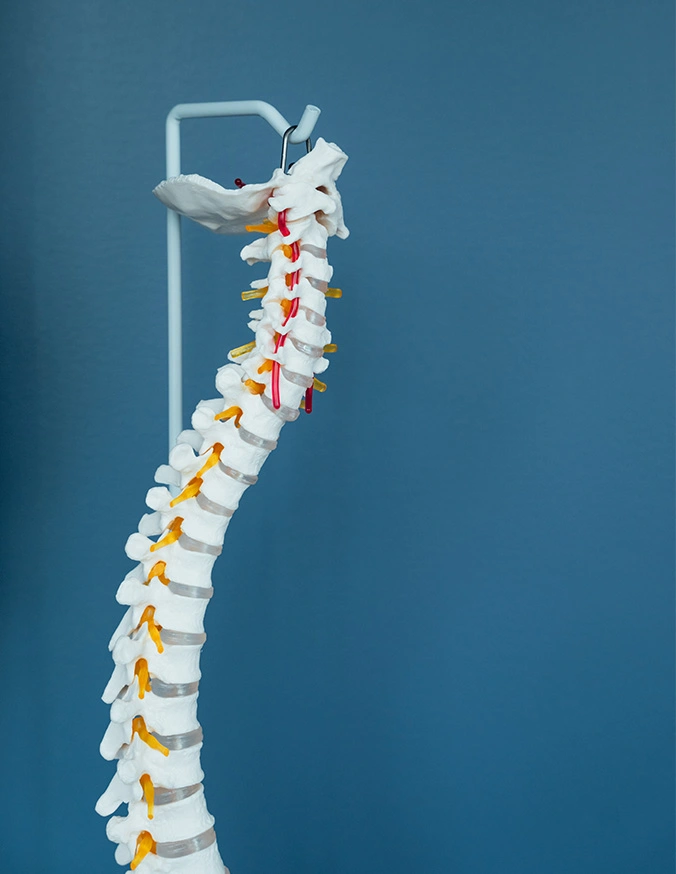
Anatomical model of human spine showing cervical vertebrae, intervertebral discs, and spinal cord on blue background - in Carmel, IN

What is Scheuermann’s Kyphosis?

Scheuermann’s kyphosis is a condition in which several vertebrae grow unevenly, becoming more wedge-shaped rather than maintaining their normal rectangular shape. This causes an exaggerated forward curvature, or kyphosis, most commonly involving the thoracic spine in the upper and middle back. Unlike postural kyphosis, which can often be corrected by intentionally standing straighter, the curve associated with Scheuermann’s kyphosis is more rigid because it results from structural changes in the spine. Treatment depends on factors such as the degree of curvature, remaining skeletal growth, symptoms, and whether the deformity is progressing.

Scheuermann’s Kyphosis Treatments We Offer

Treatment is based on factors such as the degree of kyphosis, the patient’s age and remaining growth, symptoms, and whether the curve is progressing. Observation, physical therapy, and bracing may be appropriate in certain cases, particularly for patients who are still growing. Surgery may be considered for severe or progressive deformity, significant pain that has not improved with non-surgical care, or other problems associated with the curvature.

Posterior spinal fusion can be used to correct and stabilize a significant kyphotic deformity. Through an approach from the back of the spine, Dr. Swiatek places screws and rods along selected vertebrae to improve alignment and maintain the correction. A bone graft is placed along the treated area so the vertebrae can gradually fuse together as the spine heals.

What Are Some of the Signs of Scheuermann’s Kyphosis

Scheuermann’s kyphosis becomes apparent during periods of rapid growth in adolescence. The most noticeable sign is often a rounded or hunched appearance of the upper back that does not fully straighten when posture is corrected. Other signs and symptoms can include:

  • A noticeable forward rounding or curvature of the upper back
  • Back pain, stiffness, or fatigue, particularly after prolonged sitting or physical activity
  • Tightness in the muscles of the chest or back and reduced flexibility
  • Differences in posture that remain even when intentionally standing upright
Woman working on laptop in modern bright office waiting room with white furniture and large windows - in Carmel, IN

How to Begin Your Scheuermann’s Kyphosis Treatment Journey

Evaluating Scheuermann’s kyphosis requires determining both the degree of spinal curvature and how much of the deformity is caused by structural changes within the vertebrae. Dr. Swiatek will also consider symptoms, skeletal maturity, curve progression, and previous treatment when determining the appropriate next steps. Dr. Swiatek accepts patients 16 years of age and older for evaluation and treatment.

  1. Schedule an Evaluation: Meet with Dr. Swiatek in Carmel, Indianapolis, Westfield, or Kokomo, Indiana, to discuss when the spinal curvature was first noticed, current symptoms, changes over time, and any treatment already attempted.
  2. Evaluate the Spine: A physical examination and standing spinal X-rays can be used to assess the degree and location of the curve. Additional imaging may be recommended when necessary.
  3. Assess the Curve: Dr. Swiatek will evaluate the deformity’s severity and flexibility, skeletal maturity, symptoms, and risk of progression to determine whether treatment is necessary.
  4. Review Treatment Options: Depending on these findings, treatment may involve observation, physical therapy, bracing in certain growing patients, or surgical correction for more severe cases.

What to Expect During Your Scheuermann’s Kyphosis Surgery

Surgery in Carmel, Indianapolis, Westfield, or Kokomo, Indiana for Scheuermann’s kyphosis is planned according to the severity, location, and flexibility of the spinal deformity. Dr. Swiatek will determine which levels require treatment and whether techniques such as Ponte osteotomies or, in select complex cases, a pedicle subtraction osteotomy are necessary to achieve the planned correction.

  • Preparation and Anesthesia: General anesthesia is administered, and the patient is carefully positioned to provide access to the affected portion of the spine.
  • Placement of Instrumentation: Screws and rods are placed at selected vertebrae to provide stability and allow controlled correction of the spinal curvature.
  • Correction and Fusion: The spine is carefully repositioned to improve its alignment. Osteotomies may be performed when additional correction is required, and a bone graft is placed to promote fusion between the treated vertebrae.
  • Beginning Recovery: After surgery, the patient is closely monitored as pain management and gradual movement begin. The surgeon will provide instructions for walking, incision care, activity restrictions, and follow-up appointments.
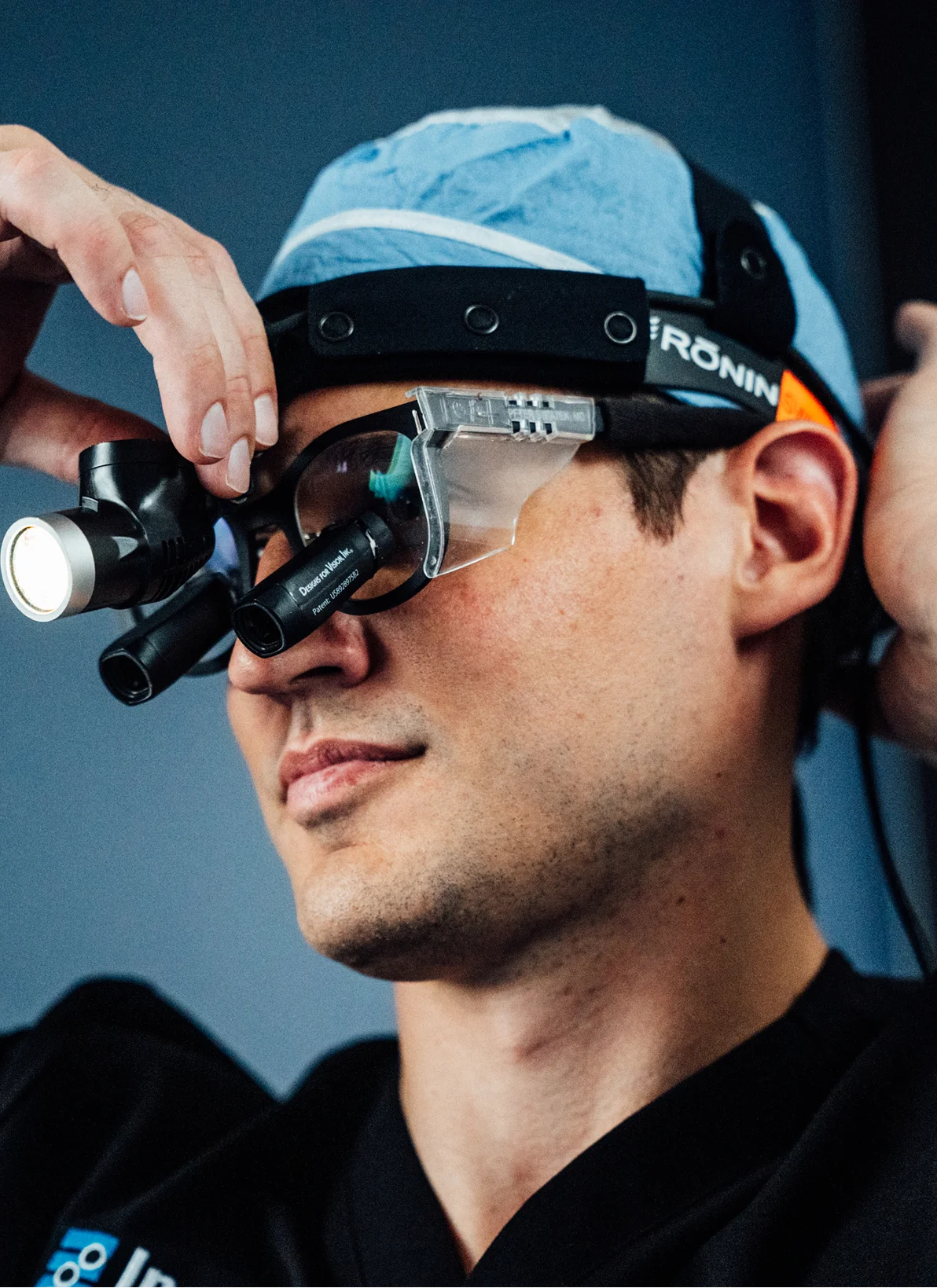
Dr Peter Swiatek wearing surgical loupes with LED headlight for precision medical procedures - in Carmel, IN

Steps to Consider For Optimal Recovery

Your Guide to Post-Scheuermann's Kyphosis Care

Recovery after surgery for Scheuermann’s kyphosis takes place gradually as the surgical area heals and fusion develops between the treated vertebrae. The timeline varies based on the extent of surgery and the individual patient’s progress.

  • Protect the Surgical Area: Follow restrictions regarding bending, twisting, lifting, and other movements that could place unnecessary stress on the healing spine.
  • Remain Gradually Active: Walking and light movement are encouraged as recovery progresses, while strenuous exercise and sports remain restricted until Dr. Swiatek clears you.
  • Attend Follow-Up Appointments: Regular postoperative visits allow Dr. Swiatek to evaluate healing, monitor spinal alignment, and determine when activities can safely be increased.
  • Follow Your Individual Recovery Plan: Return to school or work, driving, exercise, and other activities according to the instructions provided for your specific surgery and recovery progress.

How Much Does Scheuermann’s Kyphosis Treatment Cost in Carmel, Indianapolis, Westfield, and Kokomo, Indiana?

The cost of Scheuermann’s kyphosis treatment in Carmel, Indianapolis, Westfield, and Kokomo, Indiana, depends on the severity of the condition and the type of care required. Non-surgical management and surgical correction involve different expenses. When surgery is recommended, costs can also vary based on the extent of the spinal deformity, the number of vertebrae treated, the surgical techniques and instrumentation required, anesthesia, facility fees, imaging, and other aspects of care. After an evaluation, Dr. Swiatek can recommend an appropriate treatment approach, and the billing department can answer any questions or concerns about the cost of surgical management.

Philosophy

Why Choose Dr. Swiatek?

Dr. Peter Swiatek is a board-certified, fellowship-trained orthopaedic spine surgeon in Carmel, Indianapolis, Westfield, and Kokomo, Indiana, with specialized experience treating spinal deformity, degenerative disease, trauma, tumors, and complex revision cases. He completed his orthopedic surgery residency at Northwestern Memorial Hospital and his spine surgery fellowship at the Rothman Institute and Thomas Jefferson University Hospital. Dr. Swiatek emphasizes evidence-based treatment, surgical safety, and non-operative management whenever appropriate. When surgery is necessary, he focuses on selecting an approach that adequately corrects the underlying spinal problem while limiting the extent of intervention when possible. His academic background includes more than 55 peer-reviewed publications, and he is a member of the American Academy of Orthopedic Surgeons (AAOS), North American Spine Society (NASS), and the American Board of Orthopaedic Surgery (ABOS)

Teal geometric patterned wallpaper with circular and linear embossed texture in modern minimalist style

Case Studies

He also specializes in repairing failed spine surgeries and revision spine procedures. Dr. Swiatek tailors his treatment plans to the needs of each of his patients, with a focus on non-operative management whenever possible. When surgery is necessary.

Patient Reviews

Trusted by thousands of patients nationwide

“From my first consultation, I felt listened to and never rushed. The doctor clearly explained my options

Joyful woman with curly hair in orange jacket reaching toward sky against blue background - in Carmel, IN
Geometric floral pattern wallpaper with blue radiating sunburst medallions on white background

Start Your Care Today!

Take the First Step Toward Relief