Indiana Spine Group

Cervical Procedures in Carmel, IN PCDF (Posterior Cervical Decompression and Fusion)

Introduction to PCDF (Posterior Cervical Decompression and Fusion)

Posterior Stabilization for Complex Cervical Conditions

Are you experiencing persistent neck or arm pain, balance problems, difficulty with hand coordination, numbness, tingling, or weakness? These symptoms can sometimes result from compression of the spinal cord or nerve roots in the neck. When neurological symptoms are progressive or begin affecting balance, strength, or dexterity, timely evaluation can be especially important.

As a fellowship-trained spine surgeon at Indiana Spine Group, Dr. Peter Swiatek performs PCDF (posterior cervical decompression and fusion) in Carmel, Indianapolis, Westfield, and Kokomo, Indiana, to relieve spinal cord or nerve compression and stabilize the cervical spine when surgery is appropriate.

Woman in blue sweater relaxing on couch while using smartphone at home - in Carmel, IN

What is Posterior Cervical Decompression and Fusion?

Posterior cervical decompression and fusion (PCDF) is a neck surgery performed through the back of the neck to treat various cervical conditions, including cervical stenosis, myelopathy, or radiculopathy, and more. These conditions cause various uncomfortable or painful symptoms, such as arm pain, numbness, and balance issues.

PCDF addresses compression by removing bone, ligament, or other tissue contributing to pressure on the spinal cord or nerves. Screws and rods then stabilize the treated vertebrae, while a bone graft supports fusion between them.

Who Are the Best Candidates for a Posterior Cervical Decompression and Fusion?

During your consultation in Carmel, Indianapolis, Westfield, or Kokomo, IN, Dr. Swiatek will evaluate your health, symptoms, past efforts to treat your symptoms, and other factors to determine whether PCDF is a good fit. The best candidates for PCDF include those who have:

  • Persistent local neck ache or sharp, radiating pain traveling down the shoulders and arms
  • Numbness or tingling
  • Difficulty gripping objects, dropping items frequently, or lack of general upper body strength.
  • Clumsy fine-motor skills
  • Balance issues while walking
  • Progressive weakness, loss of coordination, or other neurological changes related to spinal cord compression

What Are the Benefits of Posterior Cervical Decompression and Fusion?

PCDF is designed to accomplish two important goals: create additional space for compressed neurological structures and stabilize the affected portion of the cervical spine. Depending on the condition being treated, potential benefits may include:

  • Relieving pressure on the spinal cord or nerve roots
  • Reducing neck or radiating arm pain associated with nerve compression
  • Improving numbness, tingling, weakness, or problems with hand function in some patients
  • Helping prevent progression of neurological symptoms caused by spinal cord compression
  • Stabilizing areas of the cervical spine affected by instability or deformity
  • Supporting improved function and mobility as recovery progresses
Woman working on laptop in modern bright office waiting room with white furniture and large windows - in Carmel, IN

How to Begin Your Posterior Cervical Decompression and Fusion Journey

Your treatment journey begins with a comprehensive evaluation to determine what is causing your symptoms and whether surgery is necessary. Dr. Swiatek considers non-surgical treatment whenever appropriate, but PCDF may be recommended when significant spinal cord or nerve compression, instability, deformity, or progressive neurological symptoms require surgical treatment.

During your consultation in Carmel, Indianapolis, Westfield, or Kokomo, Indiana, your evaluation may include:

  1. A look at your medical history, including prior treatments 
  2. Tests of your strength and reflexes
  3. A physical exam of your neck and arms
  4. Review of X-rays, CT scans, or MRI studies to identify areas of spinal cord or nerve compression and evaluate the condition and alignment of the cervical spine
  5. An explanation of PCDF and what the journey entails during and after the surgery
  6. Personalized preoperative instructions if surgery is recommended, including guidance regarding medications, nicotine use, fasting, and preparation for recovery

What to Expect on the Day of a Posterior Cervical Decompression and Fusion Surgery

Your PCDF surgery with Dr. Swiatek will take place at our facility in Carmel, Indiana, or one of our affiliate hospitals in Carmel, Indianapolis, Westfield, or Kokomo, Indiana. You’ll be greeted by our friendly staff and review your treatment plan with Dr. Swiatek, during which you can ask any lingering questions you may have.

Surgery length will vary depending on the number of spinal levels treated and the complexity of the condition, and you will spend additional time being monitored during your initial recovery.

The surgery will involve the following:

  • You will be put to sleep with general anesthesia and will not wake up until the surgery is over
  • You will be positioned face-down for the posterior approach, with your head carefully supported and secured for surgery.
  • Dr. Swiatek will make a vertical incision on the back of your neck
  • He will move muscles aside, remove bone spurs, and remove tissue putting pressure on the spinal cord or nerves
  • Your spine will be secured with small metal rods, screws, and bone grafts
  • The incision will be closed with sutures and covered with a bandage
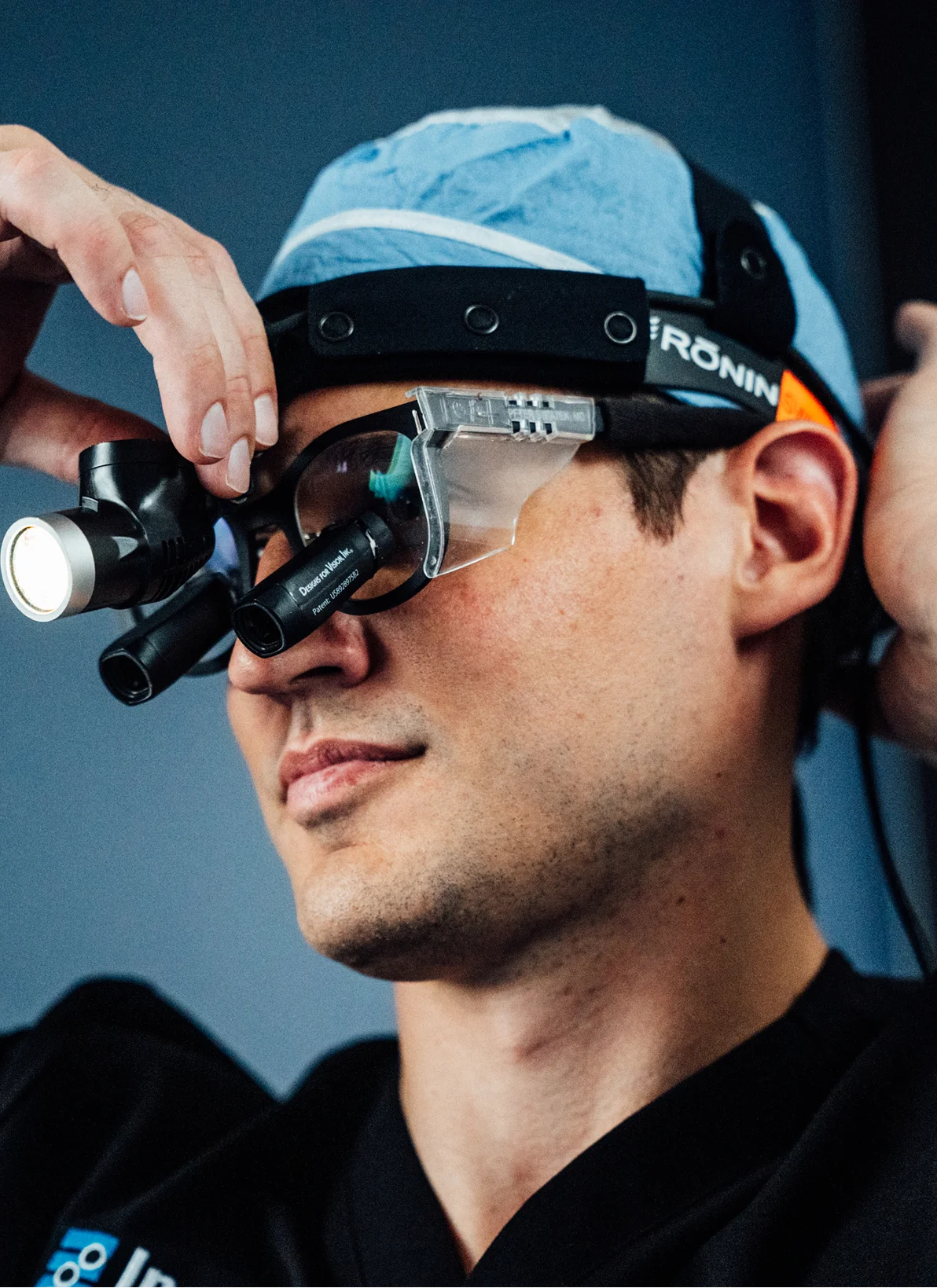
Dr Peter Swiatek wearing surgical loupes with LED headlight for precision medical procedures - in Carmel, IN

Posterior Cervical Decompression and Fusion Recovery

Your Guide to Post-Posterior Cervical Decompression & Fusion Care

Recovery after PCDF varies according to the number of spinal levels treated, the extent of decompression and fusion, your symptoms before surgery, and the physical demands of your normal activities. Dr. Swiatek will provide an individualized timeline for returning to work, driving, exercise, and other activities as your recovery progresses.

Some helpful tips to keep in mind while recovering include:

  • Take prescribed medications as directed to keep you more comfortable
  • Follow Dr. Swiatek’s guidelines to keep your incision site clean and prevent infection
  • Go on short, frequent walks in your home to help prevent blood clots and encourage stamina
  • Avoid bending, twisting, or straining the neck, using your prescribed cervical collar as directed
  • Attend all scheduled follow-up appointments in Carmel, Indianapolis, Westfield, or Kokomo and participate in physical therapy if recommended by Dr. Swiatek.

How Much Does Posterior Cervical Decompression and Fusion Cost in Carmel, Indianapolis, Westfield, and Kokomo, IN?

The cost of posterior cervical decompression and fusion in Carmel, Indianapolis, Westfield, and Kokomo, IN, depends on several factors, including your insurance coverage. Our billing department is available to answer any questions you may have about surgery costs.

Philosophy

Why Choose Dr. Swiatek?

Dr. Peter Swiatek is a board-certified, fellowship-trained orthopaedic spine surgeon serving patients in Carmel, Indianapolis, Westfield, and Kokomo, Indiana. He treats cervical conditions including spinal stenosis, myelopathy, radiculopathy, deformity, and other conditions that can cause spinal cord or nerve compression. His approach emphasizes individualized, evidence-based care and surgery when appropriate for the patient’s symptoms, imaging findings, and overall spinal condition.

Dr. Swiatek completed his orthopedic surgery residency at Northwestern Memorial Hospital and a dedicated spine surgery fellowship at the Rothman Institute and Thomas Jefferson University Hospital. His academic work includes more than 55 peer-reviewed publications and contributions to spine and orthopedic surgery literature. He is also a member of the American Academy of Orthopedic Surgeons (AAOS), North American Spine Society (NASS), American Board of Orthopaedic Surgery (ABOS).

PCDF (Posterior Cervical Decompression and Fusion) FAQ’S

Teal geometric patterned wallpaper with circular and linear embossed texture in modern minimalist style

Case Studies

He also specializes in repairing failed spine surgeries and revision spine procedures. Dr. Swiatek tailors his treatment plans to the needs of each of his patients, with a focus on non-operative management whenever possible. When surgery is necessary.

Patient Reviews

Trusted by thousands of patients nationwide

“From my first consultation, I felt listened to and never rushed. The doctor clearly explained my options

Joyful woman with curly hair in orange jacket reaching toward sky against blue background - in Carmel, IN
Geometric floral pattern wallpaper with blue radiating sunburst medallions on white background

Start Your Care Today!

Take the First Step Toward Relief