Indiana Spine Group

Lumbar Conditions in Carmel, IN Lumbar Degenerative Disc Disease

Introduction to Lumbar Degenerative Disc Disease

Wear and Changes Affecting the Lower Spinal Discs

Although some disc changes are a normal part of aging, they can sometimes cause ongoing pain when sitting, bending, walking, or exercising.​

Dr. Peter Swiatek at Indiana Spine Group offers personalized evaluations and treatments for patients with lumbar degenerative disc disease in Carmel, Indianapolis, Westfield, and Kokomo, Indiana. He’ll work with you to find the root cause of your symptoms and help you choose the best treatment for you, always starting with non-surgical options whenever possible.

Woman in blue athletic wear stretching arms overhead against sky, demonstrating back flexibility and spinal health exercise - Lumbar degenerative disc disease in Carmel, IN

What is Lumbar Degenerative Disc Disease?

Lumbar degenerative disc disease refers to age-related or other degenerative changes affecting the discs in the lower portion of the spine.

Degenerative disc disease isn’t really a disease in the usual sense, but changes that can happen in the spinal discs. Healthy discs have a lot of water, which helps cushion the vertebrae. Over time, discs can dry out, become less flexible, develop small tears, or lose height.

​Degenerative disc disease tends to happen along with disc herniation, spinal stenosis, bone spurs, and spondylolisthesis.

Lumbar Degenerative Disc Disease Treatments We Offer

The right treatment depends on how severe the degeneration is, where the problem is, whether nerves are compressed, whether the spine is unstable, and how your symptoms affect your daily life.

Dr. Swiatek will start with non-surgical treatments when possible.

If symptoms continue after trying non-surgical treatments, or if structural problems require surgery, Dr. Swiatek also offers several surgical options based on each patient’s anatomy and diagnosis.

A lumbar microdiscectomy is a procedure used primarily to relieve pressure on a spinal nerve caused by a herniated disc. It is not a treatment for every case of degenerative disc disease, but it may be appropriate when disc degeneration has resulted in a herniation that irritates or compresses a nerve.

​During a microdiscectomy, Dr. Swiatek removes the part of the disc pressing on the nerve and preserves as much healthy tissue as possible.

The goal is to relieve pressure on the nerve and improve symptoms like leg pain, numbness, or weakness. Microdiscectomy is considered if symptoms do not improve with conservative treatment or if there are serious nerve symptoms.

What Are Some of the Signs of Lumbar Degenerative Disc Disease

Lumbar degenerative disc disease can cause symptoms that range from mild lower back discomfort to ongoing pain that makes daily activities harder. Symptoms often depend on whether the disc presses on nearby nerves or causes other changes in the spine.

​Common signs can include:

  • Persistent Lower Back Pain: Aching or discomfort in your lower back may get worse after sitting, standing, bending, or being active for a long time.
  • Pain that Radiates into the Legs: If degeneration puts pressure on a nerve, pain can spread from your lower back into your buttocks, thighs, calves, or feet.
  • Numbness or Tingling: Irritation or compression of a spinal nerve can cause pins-and-needles sensations or numbness in the leg or foot.
  • Weakness or Reduced Mobility: More significant nerve compression may contribute to muscle weakness, difficulty walking, or difficulty performing activities that were previously comfortable.
Woman working on laptop in modern bright office waiting room with white furniture and large windows - in Carmel, IN

How to Begin Your Lumbar Degenerative Disc Disease Treatment Journey

If you have ongoing lower back pain that’s affecting your everyday life, the first step is to find out what is causing your symptoms.

  1. Schedule a Visit with Dr. Swiatek at Indiana Spine Group in Carmel, Indianapolis, Westfield, or Kokomo: He will talk with you about all your symptoms, medical history, past treatments, activity limits, and what you hope to achieve with treatment.
  2. Complete Any Needed Tests: Depending on your symptoms, imaging like X-rays, MRI, or CT scans can help find disc degeneration, nerve compression, instability, or other spine issues.
  3. Try Non-Surgical Options First: Dr. Swiatek prefers conservative treatments when possible, such as physical therapy, medication, injections, or changing activities.
  4. Work with Dr. Swiatek to Create a Treatment Plan Just for You: If surgery is needed, he will recommend the best approach based on your anatomy, diagnosis, symptoms, and goals.

What to Expect During Your Lumbar Degenerative Disc Disease Treatment

Your treatment will depend on whether you’re having a non-surgical or surgical procedure done. If you need surgery, the details will vary based on the type of procedure and how many spinal levels are involved.

  • Preoperative Planning: Dr. Swiatek will review your imaging and medical history, explain the recommended procedure and other options, and outline what to expect during recovery.
  • The Surgical Procedure: Depending on your condition, surgery may involve removing a herniated disc, relieving pressure on a nerve, replacing a damaged disc with an implant, or stabilizing the spine with a fusion.
  • Postoperative Monitoring: After surgery, your care team will watch your recovery, help manage pain, and get you moving again as soon as it is safe.
  • Follow-up Care: Follow-up visits let Dr. Swiatek check your healing and decide when you can slowly return to your normal activities.
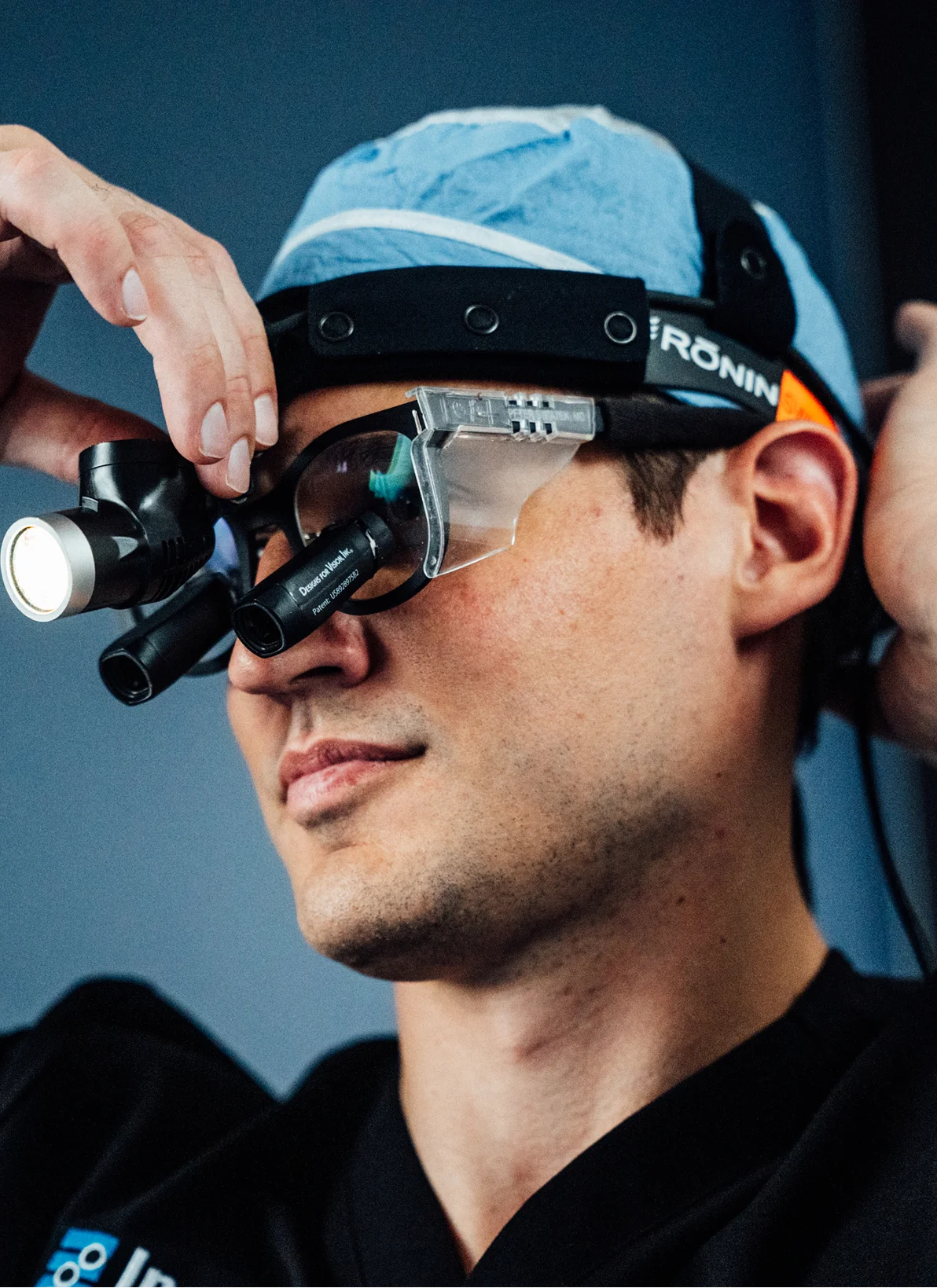
Dr Peter Swiatek wearing surgical loupes with LED headlight for precision medical procedures - in Carmel, IN

Steps to Consider For Optimal Recovery

Your Guide to Post-Lumbar Degenerative Disc Disease Treatment Care

Recovery from lumbar spine treatment can be very different depending on the procedure, but here are some general recovery tips to help you get started:

​

  • Follow Your Postoperative Instructions: Be sure to follow Dr. Swiatek’s advice about medications, incision care, activity limits, lifting, bending, and driving.
  • Stay Active: Your care team may encourage walking and other gentle movement during the early stages of recovery. Follow the activity guidelines provided for your specific procedure.
  • Go to Your Scheduled Follow-up Appointments: These visits let Dr. Swiatek check your progress and decide when you can safely do more activities.
  • Give Yourself Enough Time to Heal: Even if you start to feel better, your spine may still be recovering. Do not rush back into hard exercise, heavy lifting, or other activities until your doctor says it is okay.

If you undergo a fusion procedure, remember that symptom improvement and bone fusion are separate parts of recovery. Fusion can take up to a year to develop fully, so following postoperative instructions is especially important.

How Much Does Lumbar Degenerative Disc Disease Treatment Cost in Carmel, Indianapolis, Westfield, and Kokomo, Indiana?

The cost of treating lumbar degenerative disc disease in Carmel, Indianapolis, Westfield, and Kokomo, Indiana, can vary a lot depending on the treatment you need and your insurance plan.

The best way to find out your expected costs is to talk with our billing department at Indiana Spine Group.

​To learn more about your treatment options or to schedule a consultation with Dr. Swiatek, call (317) 428-5040.

Philosophy

Why Choose Dr. Swiatek?

At the Indiana Spine Group in Carmel, Indianapolis, Westfield, and Kokomo, Indiana, Dr. Peter Swiatek is a board-certified, fellowship-trained orthopaedic spine surgeon who treats spine diseases and disorders, including degenerative problems in the neck, mid-back, and lower back. He also treats disc herniations, spinal deformity, trauma, tumors, failed spine surgeries, and revision cases.

Dr. Swiatek has published over 55 peer-reviewed articles and often presents at national and international spine conferences. His research covers spine surgery, patient results, surgical techniques, and healthcare use. He has contributed to medical textbooks and mentors medical students, residents, and fellows.

He also keeps up with new surgical technology, including robotics and motion-preserving techniques. He is a member of the American Academy of Orthopedic Surgeons (AAOS), North American Spine Society (NASS), and the American Board of Orthopaedic Surgery (ABOS).

Teal geometric patterned wallpaper with circular and linear embossed texture in modern minimalist style

Case Studies

He also specializes in repairing failed spine surgeries and revision spine procedures. Dr. Swiatek tailors his treatment plans to the needs of each of his patients, with a focus on non-operative management whenever possible. When surgery is necessary.

Patient Reviews

Trusted by thousands of patients nationwide

“From my first consultation, I felt listened to and never rushed. The doctor clearly explained my options

Joyful woman with curly hair in orange jacket reaching toward sky against blue background - in Carmel, IN
Geometric floral pattern wallpaper with blue radiating sunburst medallions on white background

Start Your Care Today!

Take the First Step Toward Relief