Indiana Spine Group

Deformity Conditions in Carmel, IN Adolescent Idiopathic Scoliosis

Introduction to Adolescent Idiopathic Scoliosis

Understanding Abnormal Spinal Curvature in Adolescence

Adolescent idiopathic scoliosis causes the spine to develop an abnormal sideways curve during a period of rapid growth. Some curves remain mild and require only monitoring, while others may progress as an adolescent continues to grow. Peter Swiatek, MD, evaluates the degree of spinal curvature, remaining growth, symptoms, and risk of progression to determine an appropriate treatment approach for adolescents older than 16 with scoliosis in Carmel, Indianapolis, Westfield, and Kokomo, Indiana.

Diverse group of smiling young people in circle looking down at camera with bright sky background - Adolescent idiopathic scoliosis in Carmel, IN

What is Adolescent Idiopathic Scoliosis?

Adolescent idiopathic scoliosis (AIS) is a spinal condition that develops in children and teenagers, most commonly beginning around age 10 or during adolescence. The spine curves from side to side and also rotates, which can change the alignment of the shoulders, ribs, waist, or hips. “Idiopathic” means that there is no single identifiable cause for the condition. Treatment depends largely on the size and location of the curve, how much growth remains, and whether the curvature is stable or continuing to progress.
Adolescent Idiopathic Scoliosis Treatments We Offer

Not every adolescent with scoliosis requires surgery. Smaller curves may be monitored over time, while bracing may be recommended in certain growing adolescents to help prevent a curve from progressing. Surgery is generally considered for larger or progressive curves when continued progression is a concern. Dr. Swiatek evaluates the characteristics of the spinal deformity and the adolescent’s remaining growth to determine when surgical correction may be appropriate. Dr. Swiatek sees patients older than 16 who have progressive or painful spinal curvatures.

Posterior spinal fusion is a surgical procedure used to correct and stabilize significant scoliosis curves. Through an approach from the back of the spine, Dr. Swiatek places screws and rods along selected vertebrae to improve spinal alignment. A bone graft is then placed to allow the treated vertebrae to gradually fuse together, helping maintain the corrected position over time.

What Are Some of the Signs of Adolescent Idiopathic Scoliosis

Adolescent idiopathic scoliosis often develops gradually and may initially be noticed by a parent, pediatrician, or during a school or sports physical. Mild scoliosis may not cause pain or other physical symptoms, so changes in posture or body symmetry can be important signs to recognize. These may include:

  • One shoulder appearing higher or more prominent than the other
  • Uneven hips, waistline, or overall posture
  • One shoulder blade or side of the rib cage appearing more prominent
  • The body appearing to lean or shift toward one side
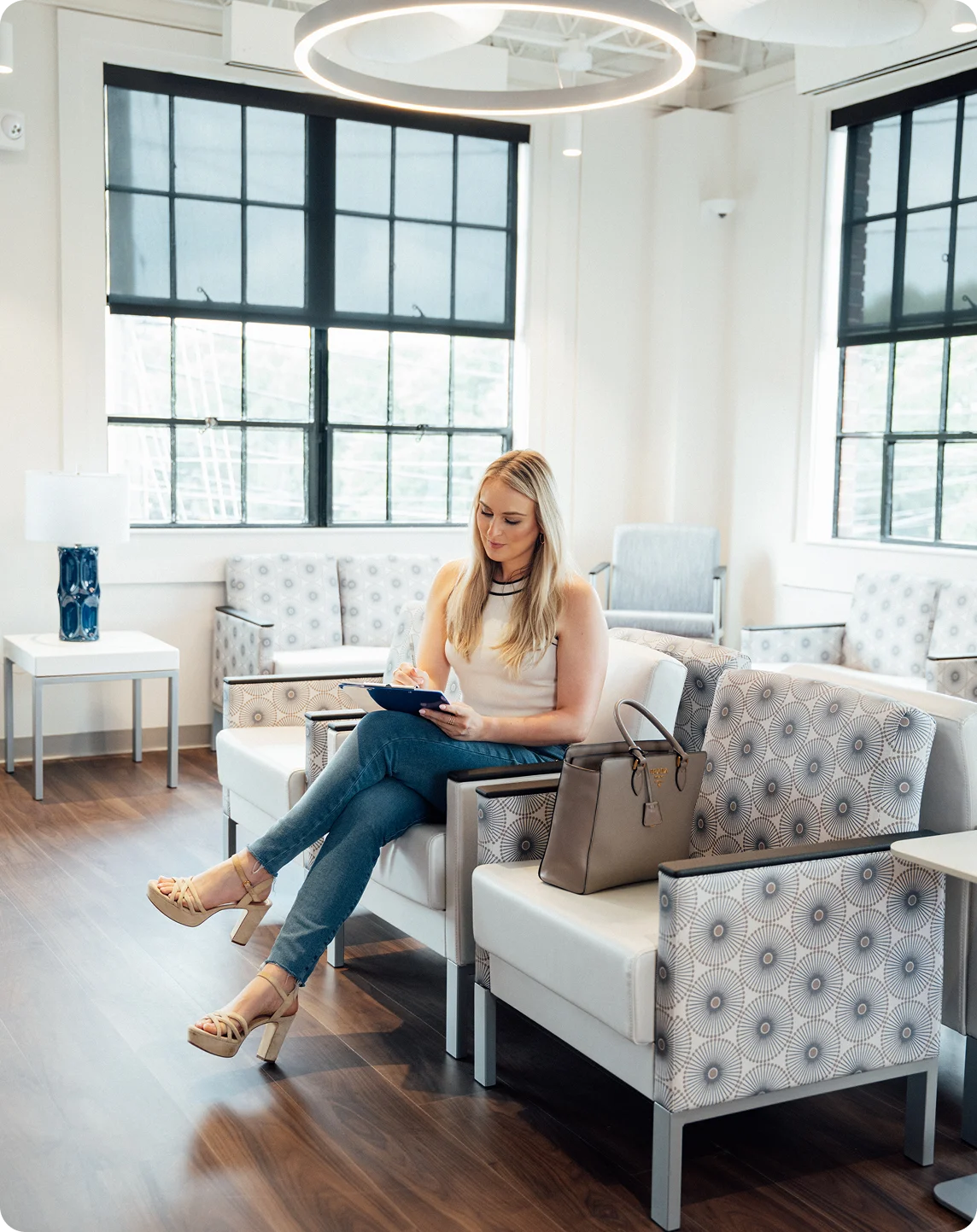
Woman working on laptop in modern bright office waiting room with white furniture and large windows - in Carmel, IN

How to Begin Your Adolescent Idiopathic Scoliosis Treatment Journey

Evaluating adolescent idiopathic scoliosis involves more than determining whether a spinal curve is present. Before recommending treatment, Dr. Swiatek considers the curve’s size and pattern, the adolescent’s age and skeletal maturity, previous imaging, and whether the scoliosis has changed over time.

  1. Schedule an Evaluation: Meet with Dr. Swiatek in Carmel, Indianapolis, Westfield, or Kokomo, Indiana, to review when the spinal curvature was first identified, any noticeable changes, previous treatment, and relevant medical history.
  2. Evaluate the Curve: A physical examination and standing spinal X-rays can help measure the curvature and assess overall spinal alignment. Additional imaging may be recommended when necessary.
  3. Assess the Risk of Progression: Dr. Swiatek will consider the curve measurement, remaining skeletal growth, and changes seen on previous X-rays to determine how likely the scoliosis is to progress.
  4. Determine an Appropriate Treatment: Depending on these findings, the next step may involve continued observation, bracing when appropriate, or discussion of surgical correction for a larger or progressive curve.

What to Expect During Your Adolescent Idiopathic Scoliosis Surgery

Scoliosis surgery is planned based on the location, size, flexibility, and overall pattern of the spinal curve before surgery. Dr. Swiatek will explain which spinal levels require treatment, the planned amount of correction, and whether additional techniques, such as a Ponte osteotomy, may be necessary.

  • Preparation and Anesthesia: The patient is placed under general anesthesia and carefully positioned for the planned posterior approach to the spine.
  • Placement of Instrumentation: Screws and rods are placed at selected levels of the spine to provide control and stability during correction.
  • Correction and Fusion: The spine is carefully repositioned to improve alignment. A bone graft is placed along the treated vertebrae to encourage them to fuse together as healing occurs.
  • Beginning Recovery: Following surgery, the patient is closely monitored while beginning pain management and gradual movement. The care team will provide specific instructions for walking, activity restrictions, incision care, and the return to school and other activities.
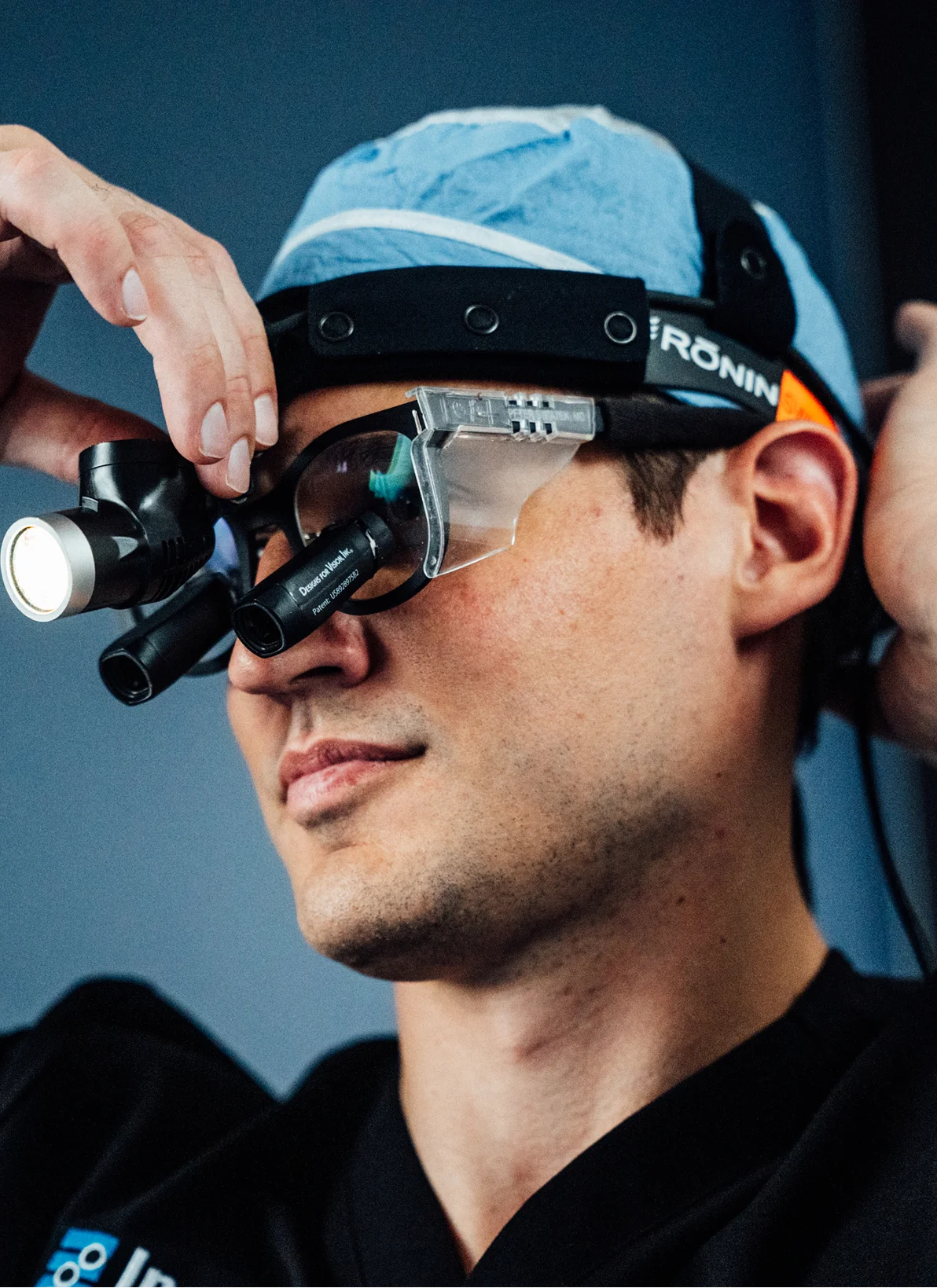
Dr Peter Swiatek wearing surgical loupes with LED headlight for precision medical procedures - in Carmel, IN

Steps to Consider For Optimal Recovery

Your Guide to Post-Adolescent Idiopathic Scoliosis Care

Recovery from adolescent scoliosis surgery occurs gradually as the surgical area heals and the spinal fusion develops. Following postoperative restrictions is especially important during this period, even if the patient begins to feel significantly better before the fusion is fully established.

  • Follow Activity Restrictions: Avoid bending, twisting, heavy lifting, sports, and other strenuous activities until Dr. Swiatek determines they can be safely resumed.
  • Increase Movement Gradually: Walking and light daily activity are introduced during recovery, with activity levels increasing according to the patient’s progress and postoperative instructions.
  • Attend Follow-Up Visits: Regular appointments allow Dr. Swiatek to evaluate healing, monitor spinal alignment, and determine when school, exercise, sports, and other activities can be resumed.
  • Watch for Concerning Changes: Contact the surgical team if there are signs of infection, worsening pain, new numbness or weakness, or other symptoms identified in the postoperative instructions.

How Much Does Adolescent Idiopathic Scoliosis Treatment Cost in Carmel, Indianapolis, Westfield, and Kokomo, Indiana?

The cost of adolescent idiopathic scoliosis treatment in Carmel, Indianapolis, Westfield, and Kokomo, Indiana, depends on the treatment plan, such as bracing, diagnostic imaging, and surgical treatment. When surgery is necessary, costs may also vary. Our billing department is available to answer any questions you may have regarding the cost of scoliosis surgery.

Philosophy

Why Choose Dr. Swiatek?

Dr. Peter Swiatek is a board-certified, fellowship-trained orthopaedic spine surgeon in Carmel, Indianapolis, Westfield, and Kokomo, Indiana, with specialized experience treating spinal deformity as well as degenerative disease, trauma, tumors, and complex spinal conditions. He completed his orthopedic surgery residency at Northwestern Memorial Hospital and his spine surgery fellowship at the Rothman Institute and Thomas Jefferson University Hospital. Dr. Swiatek emphasizes evidence-based treatment and patient safety, with the goal of limiting the extent of surgery while adequately addressing the underlying spinal condition when an operation is necessary. His extensive academic background includes more than 55 peer-reviewed publications and contributions to spine and orthopedic surgery literature. He is also a member of the American Academy of Orthopedic Surgeons (AAOS), North American Spine Society (NASS), and the American Board of Orthopaedic Surgery (ABOS).

Teal geometric patterned wallpaper with circular and linear embossed texture in modern minimalist style

Case Studies

He also specializes in repairing failed spine surgeries and revision spine procedures. Dr. Swiatek tailors his treatment plans to the needs of each of his patients, with a focus on non-operative management whenever possible. When surgery is necessary.

Patient Reviews

Trusted by thousands of patients nationwide

“From my first consultation, I felt listened to and never rushed. The doctor clearly explained my options

Joyful woman with curly hair in orange jacket reaching toward sky against blue background - in Carmel, IN
Geometric floral pattern wallpaper with blue radiating sunburst medallions on white background

Start Your Care Today!

Take the First Step Toward Relief