Indiana Spine Group

Cervical Conditions in Carmel, IN Degenerative Disc Disease

Introduction to Degenerative Disc Disease Treatment

Age-Related Changes Affecting Cervical Disc Health

Neck and back pain that worsens over time can be a key sign of degenerative disc disease (DDD). This condition involves the breakdown of the discs that cushion the spine, leading to chronic stiffness, inhibited mobility, and nerve pain.

At the Indiana Spine Group in Carmel, Indianapolis, Westfield, and Kokomo, Indiana, fellowship-trained spine surgeon Dr. Peter Swiatek works with today’s most advanced techniques to alleviate your discomfort and help you reclaim your quality of life. He is dedicated to providing customized solutions to help you return to an active lifestyle.

Degenerative-Disc-Disease-intro

What Is Degenerative Disc Disease?

Degenerative disc disease occurs when the spinal discs stop cushioning the vertebrae. These rubbery, pliant discs serve as natural shock absorbers between the vertebrae, increasing flexibility and ease of movement. With aging, wear and tear, or injury, the discs may degenerate, growing thinner and drier or developing small rips and tears that can irritate surrounding nerves.

Most common in the lumbar and cervical spine, DDD often begins with worsening stiffness, so early testing and evaluation are critical. If the condition progresses, it can lead to disc herniation, nerve compression, or bone spurs, where patients see their pain radiating out to the limbs.

What Are Some of the Signs of Degenerative Disc Disease

  • Lower back (lumbar) pain that radiates to the hips, buttocks, or thighs.
  • Neck (cervical) pain that can be felt in the shoulders, arms, or hands.
  • Numbness and tingling in the arms, hands, legs, or feet
  • Muscle weakness and loss of grip strength
  • Intensified discomfort and pain when sitting, bending, or twisting.
  • Loss of mobility and flexibility.

Degenerative Disc Disease Treatments We Offer

At the Indiana Spine Group, Dr. Swiatek offers access to a broad range of treatments addressing the impact and symptoms of degenerative disc disease. By incorporating both non-invasive and surgical interventions, he can tailor his approach to your specific concerns. 

Non-surgical treatment options can include:

  • Physical therapy
  • Targeted medications
  • Over-the-counter medications
  • Injections

Surgical interventions in the cervical spine can include:

  • Anterior Cervical Discectomy and Fusion (ACDF): With this technique, Dr. Swiatek removes a compromised disc that is pressing on the spinal cord, alleviating numbness, weakness, and chronic pain. He then fuses the affected bones to prevent instability and symptom recurrence.
  • Anterior Cervical Corpectomy and Fusion (ACCF): This neck surgery involves removing a damaged vertebra and disc to relieve pressure on the spinal cord. This is followed by bone grafting, implantation of a spacer, and often the placement of a metal plate with screws.
  • Cervical disc replacement (CDR): This surgery removes damaged or worn-down cushioning in the neck and replaces it with a plastic or metal implant. This can restore range of motion while reducing pain and discomfort.
  • Posterior Cervical Decompression and Fusion (PCDF): This neck surgery is performed from the back to alleviate spinal cord tension. After Dr. Swiatek takes pressure off of the spinal cord, metal screws and rods are implanted for stability, targeting conditions like spinal stenosis and disc issues.
  • Posterior Cervical Foraminotomy (PCF): This minimally invasive surgery is carried out through the back of the neck and can address conditions like foraminal stenosis or a herniated disc without spinal fusion.
Woman working on laptop in modern bright office waiting room with white furniture and large windows - in Carmel, IN

How to Begin Your Degenerative Disc Disease Treatment Journey

Your journey at the Indiana Spine Group begins with a comprehensive consultation. Diagnostic services to best determine your condition include:

  • Physical examinations evaluating nerve function and reflexes
  • A thorough medical review
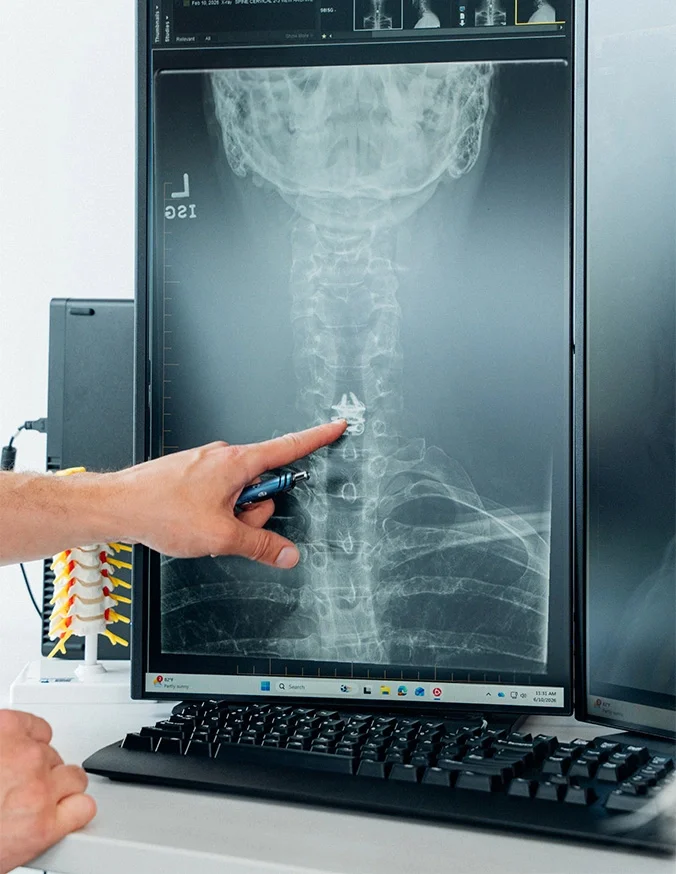
  • X-rays that reveal the condition of the spine
  • MRI scans, which offer detailed imaging of the soft tissues, nerves, spinal cord, and skeletal structures
  • CT scans that show information about the bones, blood vessels, and soft tissues

Once Dr. Swiatek completes your initial assessment, he can suggest the best path to healing and regaining your mobility, comfort, and quality of life. As an experienced spine surgeon, he offers a broad range of solutions and is often sought out when patients haven’t found success in the past.

What to Expect During Your Degenerative Disc Disease Surgery

On the day of your degenerative disc disease surgery, you’ll arrive at our hospital in Carmel or at one of our partnering hospitals in Carmel, Indianapolis, Westfield, or Kokomo.

Dr. Swiatek will review your treatment plan with you and answer any lingering questions. Here’s what to expect during your procedure:

1. The surgery is performed under general anesthesia for your comfort, peace of mind, and safety.

2. Depending on the chosen procedure and technique, an incision will be made in the front or back of the neck.

3. Dr. Swiatek will address any structure causing compression on the nerves or spinal cord that is causing you discomfort and/or affecting function.

4. The area is either treated with a spacer, plate and screws or a screw-and-rod construct. For motion-preservation procedures, an artificial disc may be used.

Afterward, you will be placed in our state-of-the-art recovery suite and carefully monitored until discharge home that same day or admission for observation.

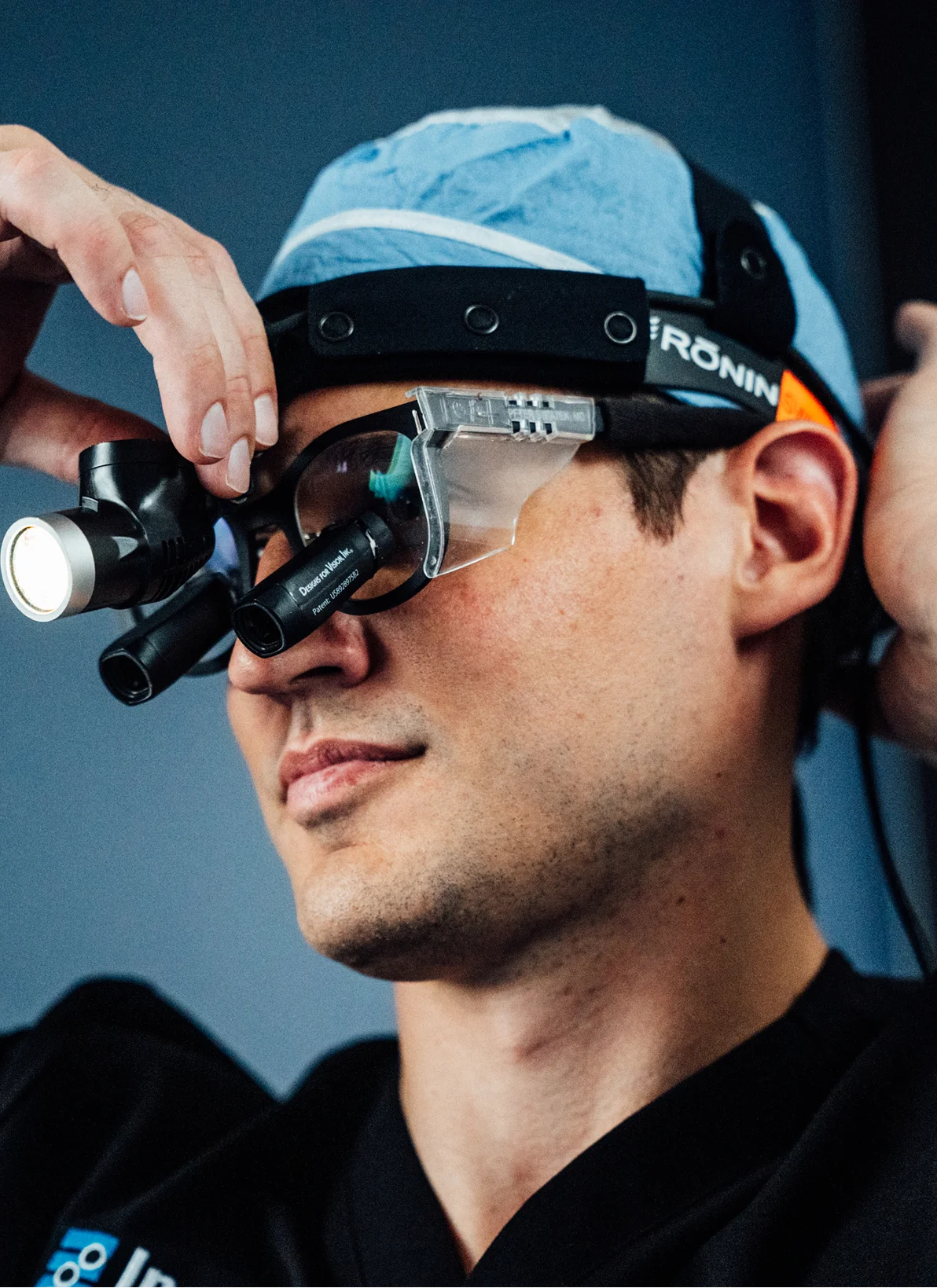
Dr Peter Swiatek wearing surgical loupes with LED headlight for precision medical procedures - in Carmel, IN

Steps to Consider For Optimal Recovery

Your Guide to Post-Degenerative Disc Disease Care

Recovery time after degenerative disc disease surgery can vary based on the individualized solution Dr. Swiatek uses to increase your comfort and mobility. Minor decompression techniques usually require 3-4 weeks of downtime, while more extensive spinal fusion and artificial disc replacement techniques can require 6 to 12 months of healing. Dr. Swiatek will provide detailed aftercare instructions, a schedule for follow-up visits, and ongoing availability to respond promptly to any concerns or questions that arise during healing.

How Much Does Degenerative Disc Disease Treatment Cost in Carmel, Indianapolis, Westfield, and Kokomo, Indiana?

Pricing for DDD treatment in Carmel, Indianapolis, Westfield, and Kokomo, Indiana, can vary widely because each treatment plan is unique and tailored to your individual needs and concerns. The best way to get a personalized quote is to book a preliminary consultation with Dr. Swiatek at the Indiana Spine Group today. He will evaluate your condition, create a results-oriented treatment plan, and answer all your questions with authority and precision. Call now to get started.

Philosophy

Why Choose Dr. Swiatek?

Dr. Peter Swiatek is a board-certified, fellowship-trained orthopaedic spine surgeon specializing in diseases and disorders of the spine, including disc herniations, degenerative cervical, thoracic, and lumbar disease, trauma, tumors, and spinal deformity. He also excels in providing answers and treatment after failed spine surgeries and revision spine procedures.

Dr. Swiatek tailors his treatment plans to each patient’s needs, choosing conservative solutions whenever possible. When surgery is necessary, he takes pride in offering customized solutions that truly support well-being, mobility, and a full return to an active lifestyle.

Dr. Swiatek has extensive expertise in using the latest technology and modalities in spine surgery. This ranges from incorporating robotics to enhance surgical precision to performing motion-preservation (non-fusion) procedures. He is passionate about patient safety and always prioritizes evidence-based interventions.

Training Background

Dr. Swiatek graduated magna cum laude from Harvard University with a degree in neurobiology. He then graduated with honors from the University of Michigan Medical School in Ann Arbor, MI, earning the Dean’s commendation for excellence in clinical skills.

Dr. Swiatek completed his orthopedic surgery training at Northwestern Memorial Hospital in Chicago, IL, ranked as one of the country’s top orthopedic and neurosurgical spine centers. After his residency, Dr. Swiatek was chosen for an elite spine surgery fellowship at the world-renowned Rothman Institute and Thomas Jefferson University Hospital in Philadelphia, PA. AAOS, NASS, and the American Board of Orthopaedic Surgery (ABOS)

Teal geometric patterned wallpaper with circular and linear embossed texture in modern minimalist style

Case Studies

He also specializes in repairing failed spine surgeries and revision spine procedures. Dr. Swiatek tailors his treatment plans to the needs of each of his patients, with a focus on non-operative management whenever possible. When surgery is necessary.

Patient Reviews

Trusted by thousands of patients nationwide

“From my first consultation, I felt listened to and never rushed. The doctor clearly explained my options

Joyful woman with curly hair in orange jacket reaching toward sky against blue background - in Carmel, IN
Geometric floral pattern wallpaper with blue radiating sunburst medallions on white background

Start Your Care Today!

Take the First Step Toward Relief