Indiana Spine Group

Lumbar Procedures in Carmel, IN TLIF (Transforaminal Lumbar Interbody Fusion)

Introduction to Transforaminal Lumbar Interbody Fusion (TLIF)

Restore Stability and Relieve Lumbar Nerve Compression

If you have ongoing back or leg pain from spinal instability, disc problems, or nerve pressure, everyday tasks can become harder.

Dr. Peter Swiatek at Indiana Spine Group is a fellowship-trained spine surgeon who helps patients in Carmel, Indianapolis, Westfield, and Kokomo, IN, make life a little easier with TLIF.

Woman experiencing lower back pain while sitting on bed, holding her lumbar spine area - Tilf in Carmel, IN

What Is a TLIF?

Transforaminal lumbar interbody fusion, or TLIF, is a type of spinal fusion that helps decompress pinched nerves and stabilize part of the lower back. It treats problems like degenerative disc disease, spondylolisthesis, spinal stenosis, and some spinal deformities.

​During the procedure, Dr. Swiatek reaches the spine from the back. He delicately decompresses the pinched nerves and removes the damaged disc. He then inserts an interbody implant, typically made of metal or special plastic. A bone graft is added to help the nearby vertebrae heal and join together. Screws and rods are placed to keep the spine stable while it heals.

Who Are the Best Candidates for a TLIF?

TLIF may be an option if you have a lower back problem, including leg pain and weakness, that has not improved with other treatments and needs stabilization or nerve relief.

You might be a candidate for TLIF if you:

  • Have Spinal Instability or Spondylolisthesis: Unusual movement between the bones in your spine can cause pain or press on nerves.
  • Have Significant Disc Degeneration: A badly worn disc can cause pain and reduce the space between your vertebrae, which can pinch nerves and cause leg pain.
  • Experience Nerve-related Symptoms: If nerves are pressed, you might have leg pain, numbness, tingling, or weakness.
  • Haven’t Found Relief with Non-surgical Care: Treatments like physical therapy, medicine, or injections are usually tried before surgery.

What Are the Benefits of a TLIF?

When it is the right choice, TLIF can help fix several lower back problems in one surgery.​

Some benefits of TLIF are:

  • Spinal Stabilization: Fusion can steady a part of the spine that is unstable or moving in an unusual way.
  • Decompression of Affected Nerves: The surgery can reach areas that might be pressing on nerves, so Dr. Swiatek can relieve that pressure if needed.
  • Restoration of Disc Height: The implant can bring back space between the bones in your spine, which may also help the nerves.
  • Treatment of Several Spinal Conditions: TLIF can be used for problems like spondylolisthesis, degenerative disc disease, spinal stenosis, and some spinal deformities.
Woman working on laptop in modern bright office waiting room with white furniture and large windows - in Carmel, IN

How to Begin Your TLIF Journey

If you keep having back or leg symptoms and have been told you might need spinal fusion, meeting with a specialist can help you learn more about your choices.

  • Set Up a Visit with Dr. Swiatek at Indiana Spine Group in Carmel, Indianapolis, Westfield, and Kokomo: You’ll discuss your symptoms, medical history, past treatments, and how your condition affects your daily life.
  • Get Diagnostic Testing: Tests like X-rays, MRI, or CT scans help check your discs, bones, nerves, and how your spine lines up and moves.
  • Review Your Options: Dr. Swiatek will discuss conservative treatment and surgical alternatives based on your diagnosis and individual circumstances.
  • Make a Plan: If TLIF is suggested, Dr. Swiatek will explain the surgery, possible risks, what recovery looks like, and if any other procedures are needed.

What to Expect on the Day of TLIF Surgery

After anesthesia, Dr. Swiatek will make an incision in your back to reach the problem area. On some occasions, multiple incisions may be made. He will decompress the pinched nerves and remove one of the joints in the lower back to access the damaged disc. He will then remove the damaged disc and get the space ready for the implant.

If additional nerves are being squeezed, Dr. Swiatek will make more space for them. He will then put an implant with bone graft into the disc space. Screws and rods are added to keep the bones stable.

After the surgery, the incision or incisions will be closed, and you will be closely monitored as you wake up.

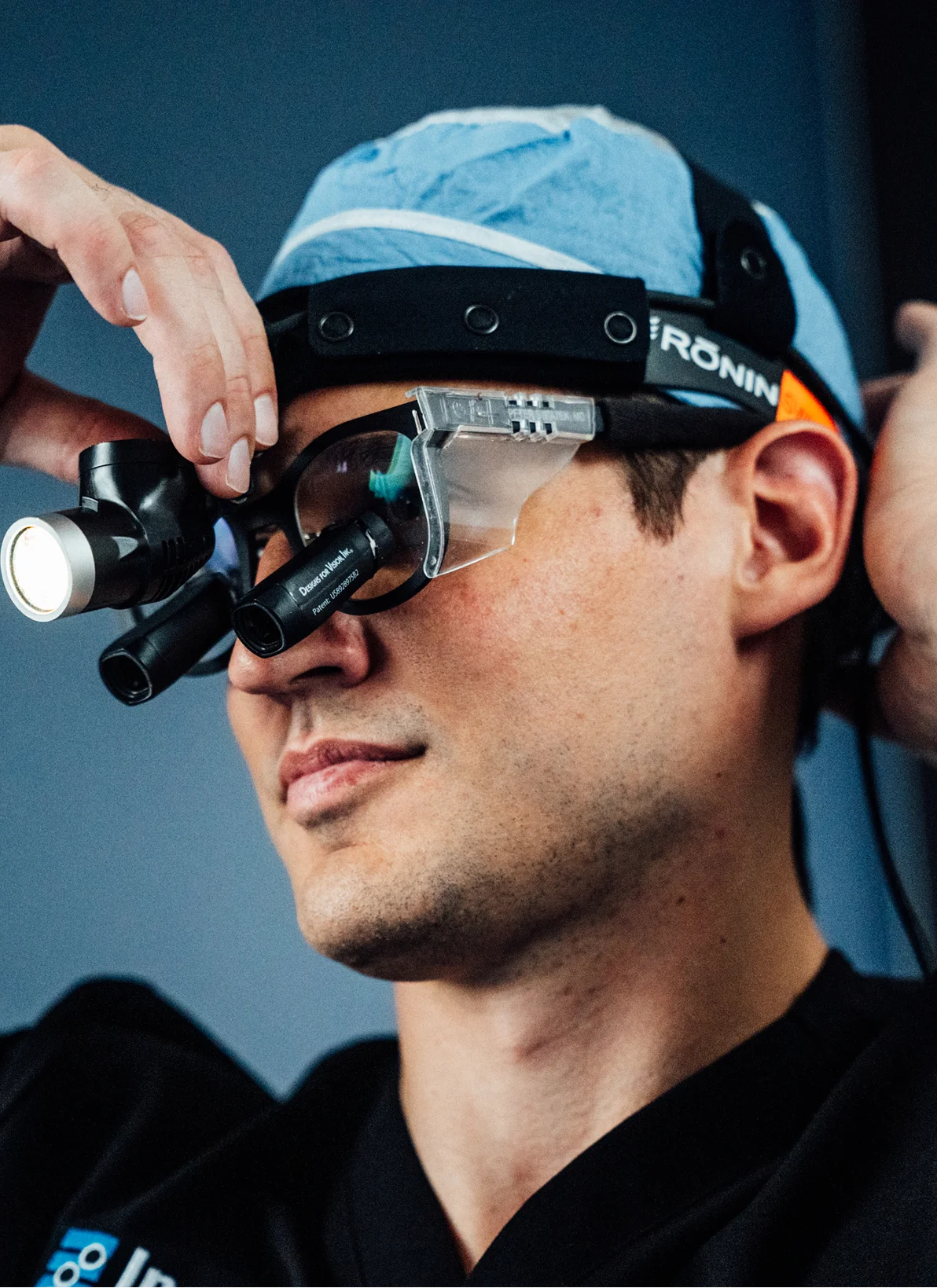
Dr Peter Swiatek wearing surgical loupes with LED headlight for precision medical procedures - in Carmel, IN

TLIF Recovery

Your Guide to Post-TLIF Care

TLIF recovery depends on how many areas were treated, if you had other procedures, your health, and how your body heals.

Most people are encouraged to start moving after surgery. Walking is often part of early recovery, but you may need to avoid heavy lifting, lots of bending, twisting, or hard exercise for a while.​

Some people notice their leg pain improves soon after surgery. Other symptoms might take longer to improve, especially if a nerve was pressed for a long time.

Since TLIF fuses part of your spine, the bones need time to heal together. You will slowly do more as you recover. Dr. Swiatek will check your progress at follow-up visits and tell you when it is safe to get back to certain activities.

How Much Does a TLIF Cost in Carmel, Indianapolis, Westfield, and Kokomo, IN?

The cost of TLIF in Carmel, Indianapolis, Westfield, and Kokomo, IN, depends on your condition and the complexity of the surgery. Insurance typically covers procedures involving TLIF. The Indiana Spine Group team can provide more details about costs and insurance after Dr. Swiatek evaluates your condition and creates a treatment plan. To find out more about TLIF or to set up a visit with Dr. Swiatek, call (317) 428-5040.

Philosophy

Why Choose Dr. Swiatek?

Dr. Peter Swiatek is a board-certified, fellowship-trained orthopaedic spine surgeon with orthopedic surgery training at Northwestern Memorial Hospital, followed by fellowship training at the Rothman Institute and Thomas Jefferson University Hospital. His academic work includes more than 55 peer-reviewed publications, presentations at national and international spine conferences, and contributions to orthopedic and spine surgery textbooks.​

Dr. Swiatek also has experience with modern spine surgery techniques and technology, including robotic-assisted procedures and motion-preservation techniques. He is affiliated with the American Academy of Orthopedic Surgeons (AAOS), North American Spine Society (NASS), and the American Board of Orthopaedic Surgery (ABOS).

TLIF (Transforaminal Lumbar Interbody Fusion) FAQ’S

Teal geometric patterned wallpaper with circular and linear embossed texture in modern minimalist style

Case Studies

He also specializes in repairing failed spine surgeries and revision spine procedures. Dr. Swiatek tailors his treatment plans to the needs of each of his patients, with a focus on non-operative management whenever possible. When surgery is necessary.

Patient Reviews

Trusted by thousands of patients nationwide

“From my first consultation, I felt listened to and never rushed. The doctor clearly explained my options

Joyful woman with curly hair in orange jacket reaching toward sky against blue background - in Carmel, IN
Geometric floral pattern wallpaper with blue radiating sunburst medallions on white background

Start Your Care Today!

Take the First Step Toward Relief