Indiana Spine Group

Deformity Conditions in Carmel, IN Adult Degenarative Scoliosis

Introduction to Adult Degenerative Scoliosis

Age-Related Spinal Curvature and Imbalance

Changes in the discs, joints, and other spinal structures can gradually alter alignment as a person ages. When these changes cause the spine to develop an abnormal sideways curve, the condition is known as adult degenerative scoliosis. Some people experience relatively few symptoms, while others develop persistent back pain, difficulty standing upright, or symptoms caused by pressure on spinal nerves. Peter Swiatek, MD, in Carmel, Indianapolis, Westfield, and Kokomo, Indiana, evaluates the spinal curve as well as the degenerative changes contributing to it to determine an appropriate treatment approach for his patients.

Man in athletic wear sitting on yoga mat outdoors during fitness workout or stretching session - Adult degenerative scoliosis in Carmel, IN

What is Adult Degenerative Scoliosis?

Adult degenerative scoliosis is a spinal curvature that develops after the spine has reached maturity, often as a result of gradual wear and degeneration. As the discs between the vertebrae lose height and the small joints of the spine develop arthritis, these changes may occur unevenly and cause the spine to shift or curve to one side. Degeneration can also contribute to spinal stenosis, instability, or compression of nearby nerves. Treatment depends on the curve’s severity, the patient’s symptoms, overall spinal alignment, and the specific structures affected by degeneration.
Adult Degenerative Scoliosis Treatments We Offer

Treatment is based on the symptoms caused by adult degenerative scoliosis rather than the presence of a spinal curve alone. Non-surgical care may be appropriate for many patients, while surgery may be considered when pain or neurologic symptoms remain significant, nerve compression is present, spinal instability develops, or the deformity substantially affects function. Depending on the underlying problems, surgery may focus on nerve decompression, stabilization, correction of spinal alignment, or a combination of these goals.

A lumbar laminectomy may be used when spinal stenosis associated with degenerative scoliosis places pressure on the nerves. The procedure removes a portion of bone from the back of the affected vertebra to create additional room for the compressed nerves. In patients with significant instability or deformity, decompression may need to be combined with a fusion procedure.

What Are Some of the Signs of Adult Degenerative Scoliosis

Symptoms of adult degenerative scoliosis can vary considerably. Some people are primarily affected by back pain, while others develop leg symptoms when degenerative changes narrow the spaces available for the spinal nerves. Changes in spinal alignment may also become increasingly noticeable over time. Common signs and symptoms include:

  • Persistent or worsening pain in the lower back
  • Pain, numbness, tingling, or weakness that extends into one or both legs
  • Difficulty standing upright or a noticeable shift of the torso to one side
  • Reduced ability to stand or walk comfortably for extended periods
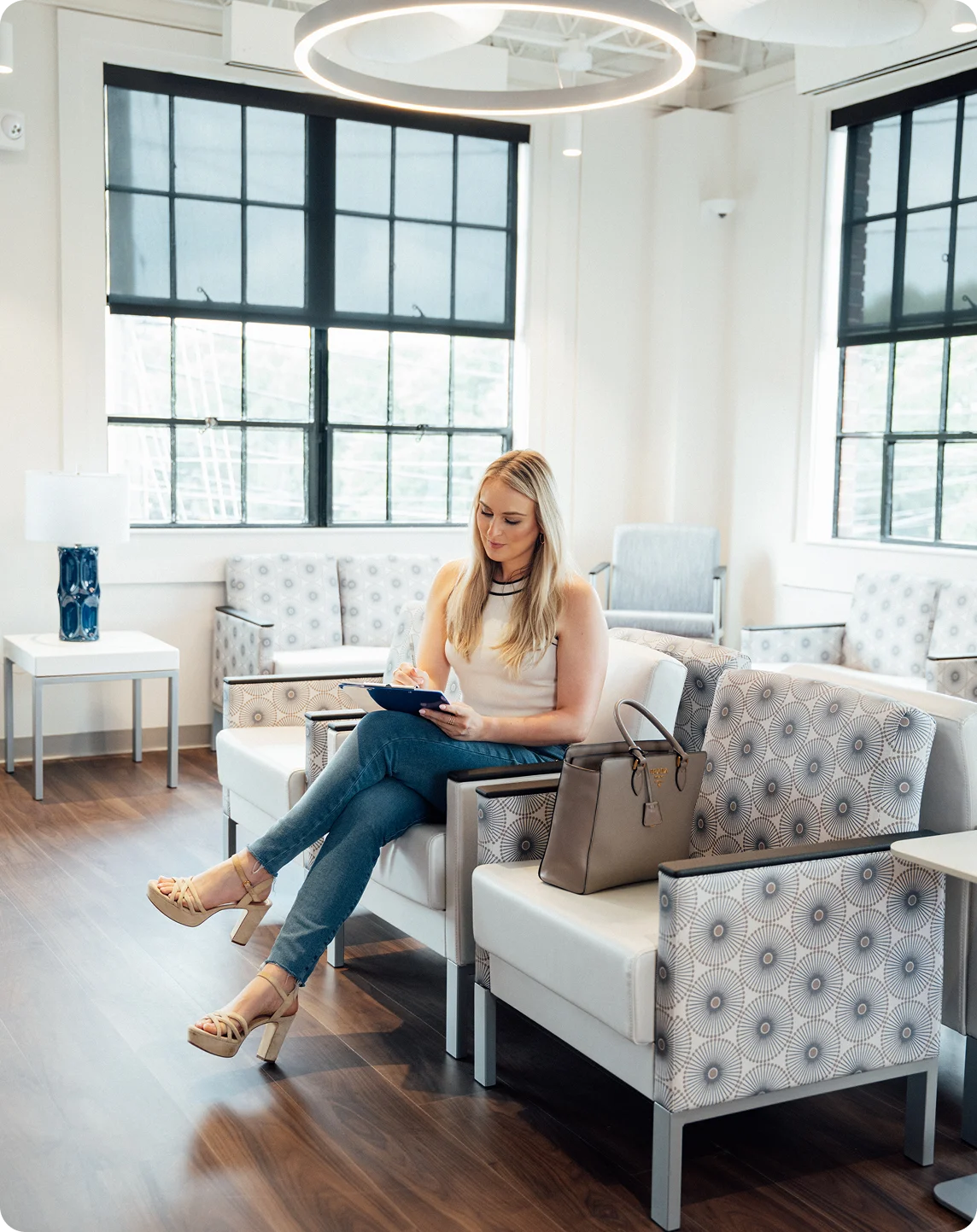
Woman working on laptop in modern bright office waiting room with white furniture and large windows - in Carmel, IN

How to Begin Your Adult Degenerative Scoliosis Treatment Journey

Adult degenerative scoliosis can involve several problems at the same time, including disc degeneration, arthritis, nerve compression, instability, and changes in overall spinal alignment. Dr. Swiatek evaluates each of these factors to determine which findings are responsible for a patient’s symptoms and which require treatment.

  1. Schedule an Evaluation: Schedule a consultation with Dr. Swiatek either in Carmel, Indianapolis, Westfield, or Kokomo, Indiana, to discuss your back or leg symptoms, changes in posture or function, previous spine treatment, and how the condition affects your daily activities.
  2. Assess the Spine: A physical examination and standing X-rays can be used to evaluate the spinal curve and overall alignment. MRI, CT, or other imaging may be recommended to examine the nerves and other spinal structures in greater detail.
  3. Identify the Source of Symptoms: Dr. Swiatek will determine whether symptoms are primarily related to nerve compression, degeneration, instability, the spinal deformity itself, or a combination of factors.
  4. Develop a Treatment Approach: Depending on the findings, treatment may involve continued non-surgical management or a surgical procedure to address the specific problems responsible for your symptoms.

What to Expect During Your Adult Degenerative Scoliosis Surgery

No single operation fits every case of adult degenerative scoliosis. Surgery is planned according to the location and severity of the curve, areas of nerve compression, spinal stability, overall alignment, and the patient’s individual needs. Some patients require treatment of only a limited portion of the spine, while more complex deformities may require a larger reconstruction.

  • Preparation and Anesthesia: General anesthesia is administered, and the patient is positioned according to the surgical approach or combination of approaches being used.
  • Addressing Nerve Compression: When necessary, the surgeon addresses bone, ligament, disc material, or other structures contributing to nerve compression to create additional space for the affected nerves.
  • Restoring Stability and Alignment: Interbody implants, screws, rods, bone graft, or a combination of these may be used to stabilize the spine and improve its alignment.
  • Beginning Recovery: After surgery, the patient is monitored while pain management and gradual movement begin. Instructions are provided for walking, incision care, activity restrictions, and follow-up appointments.
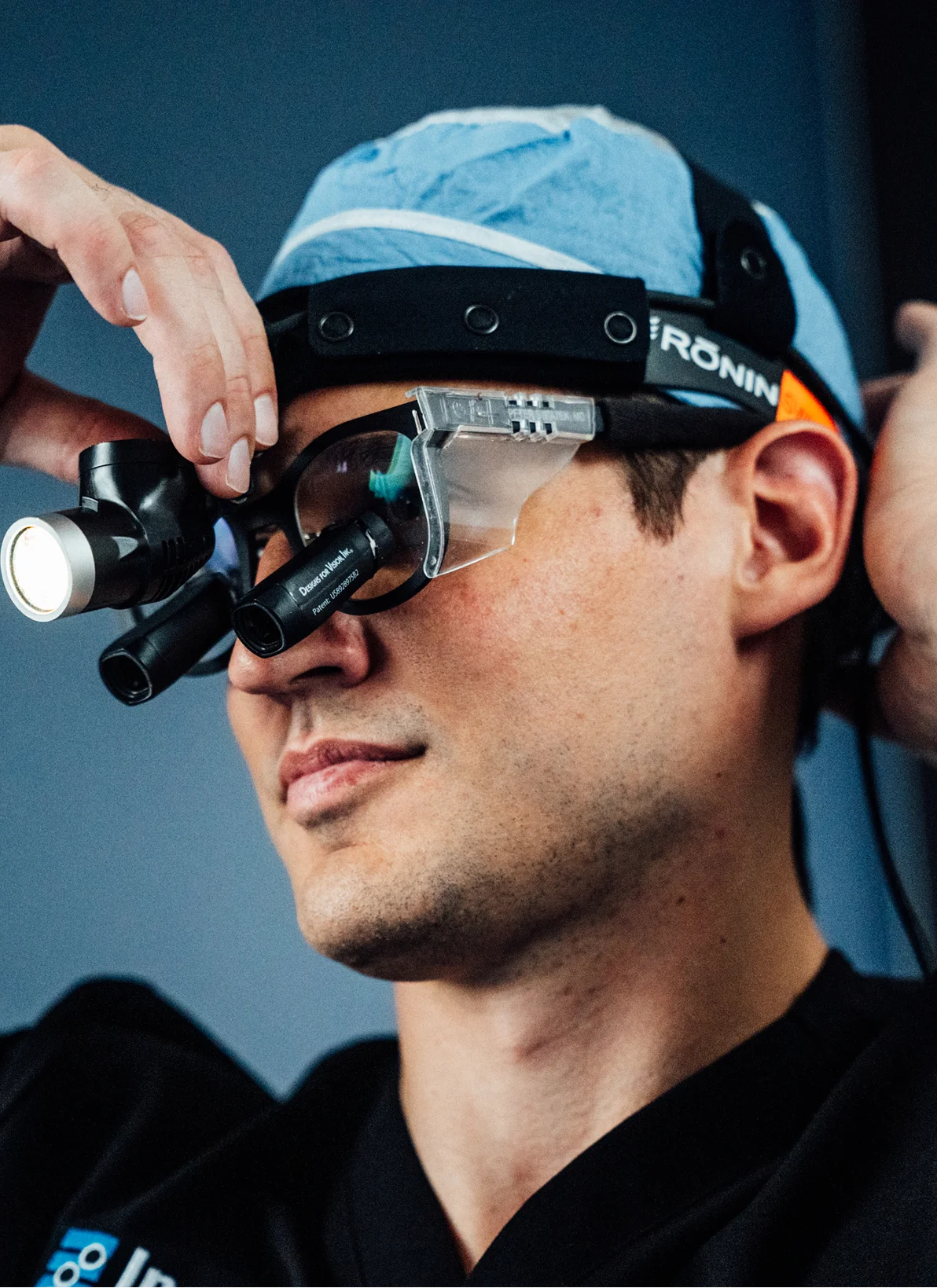
Dr Peter Swiatek wearing surgical loupes with LED headlight for precision medical procedures - in Carmel, IN

Steps to Consider For Optimal Recovery

Your Guide to Post-Adult Degenerative Scoliosis Care

Recovery after adult degenerative scoliosis surgery varies depending on the extent of the procedure, the number of spinal levels treated, and the patient’s overall health. Following postoperative instructions and gradually increasing activity can help protect the surgical area as healing and fusion occur.

  • Follow Movement Restrictions: Avoid bending, twisting, heavy lifting, and other activities restricted by Dr. Swiatek while the spine heals.
  • Stay Appropriately Active: Walking is often an important part of early recovery and can be gradually increased according to your postoperative instructions and tolerance.
  • Attend Follow-Up Visits: Regular appointments allow Dr. Swiatek to monitor healing, evaluate symptoms and spinal alignment, and determine when you can safely increase activity levels.
  • Return to Activities Gradually: Resume driving, work, exercise, and other strenuous activities based on your individual recovery rather than a predetermined timeline.

How Much Does Adult Degenerative Scoliosis Treatment Cost in Carmel, Indianapolis, Westfield, and Kokomo, Indiana?

The cost of adult degenerative scoliosis treatment in Carmel, Indianapolis, Westfield, and Kokomo, Indiana, can vary by patient, depending on the severity of the condition, the type of treatment required, and insurance. Non-surgical management and surgical procedures entail different expenses, and the cost of surgery can vary with the number of spinal levels treated, the procedures and instrumentation required, anesthesia, facility fees, imaging, and the overall complexity of the spinal deformity. After an evaluation, Dr. Swiatek can determine an appropriate treatment approach, and patients are welcome to contact our billing department to discuss treatment costs.

Philosophy

Why Choose Dr. Swiatek?

Dr. Peter Swiatek is a board-certified, fellowship-trained orthopaedic spine surgeon with experience treating spinal deformity, degenerative disease, disc herniations, trauma, tumors, and complex revision cases. He completed his orthopedic surgery residency at Northwestern Memorial Hospital and his spine surgery fellowship at the Rothman Institute and Thomas Jefferson University Hospital. Central Indiana’s Dr. Swiatek prioritizes non-operative management whenever appropriate and takes an evidence-based approach to surgical care, emphasizing patient safety and addressing the underlying spinal problem without performing more extensive surgery than necessary. He has contributed to more than 55 peer-reviewed publications and is a member of the American Academy of Orthopedic Surgeons (AAOS), North American Spine Society (NASS), and the American Board of Orthopaedic Surgery (ABOS).

Teal geometric patterned wallpaper with circular and linear embossed texture in modern minimalist style

Case Studies

He also specializes in repairing failed spine surgeries and revision spine procedures. Dr. Swiatek tailors his treatment plans to the needs of each of his patients, with a focus on non-operative management whenever possible. When surgery is necessary.

Patient Reviews

Trusted by thousands of patients nationwide

“From my first consultation, I felt listened to and never rushed. The doctor clearly explained my options

Joyful woman with curly hair in orange jacket reaching toward sky against blue background - in Carmel, IN
Geometric floral pattern wallpaper with blue radiating sunburst medallions on white background

Start Your Care Today!

Take the First Step Toward Relief